Deep time · c. 2500 BCE
The Indus Valley
Harappan

Planned cities older than the Vedas — and an undeciphered script, so its social order is genuinely unknown.
Timeline
Eight illuminated plates along four thousand years — the same arc Nandalal Bose painted into the Constitution, here in photographs from the free archives. Turn through them, then read the full length below.
Deep time · c. 2500 BCE
Harappan
Planned cities older than the Vedas — and an undeciphered script, so its social order is genuinely unknown.
Deep time · c. 1380 BCE
Boğazköy
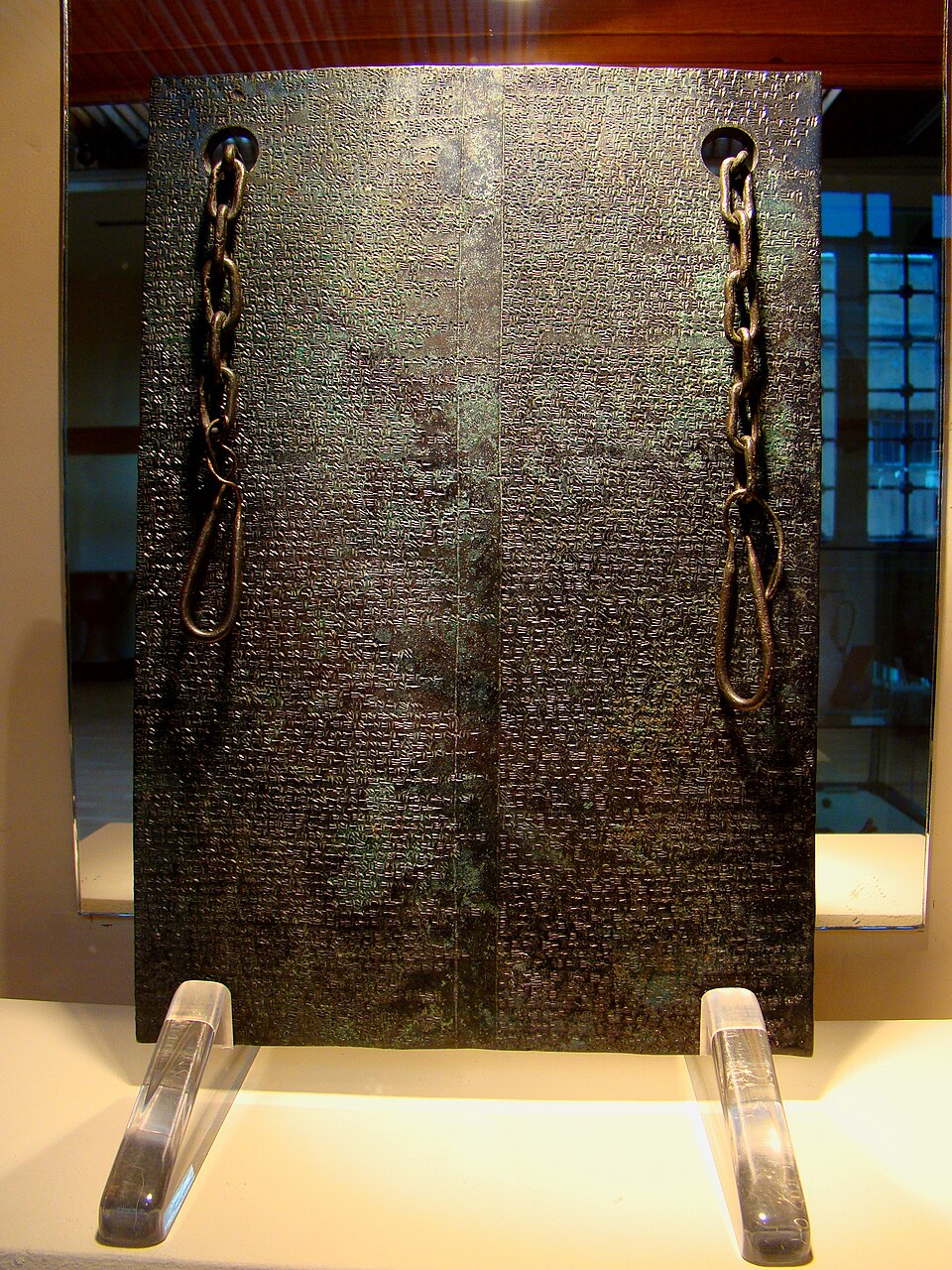
Indo-Aryan gods invoked in Rigvedic order — a dated, external fixed point for the spread of the language.
Classical · 5th c. BCE
Sarnath
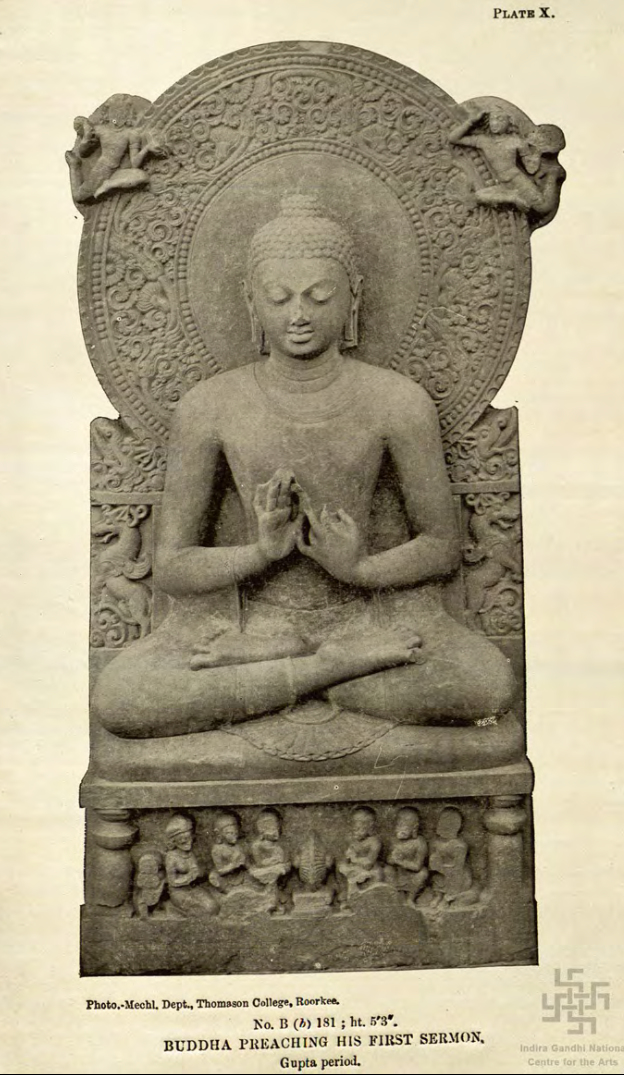
A teaching that rejected Vedic sacrifice and birth-hierarchy — the tradition Ambedkar would return to in 1956.
Classical · c. 250 BCE
Mauryan
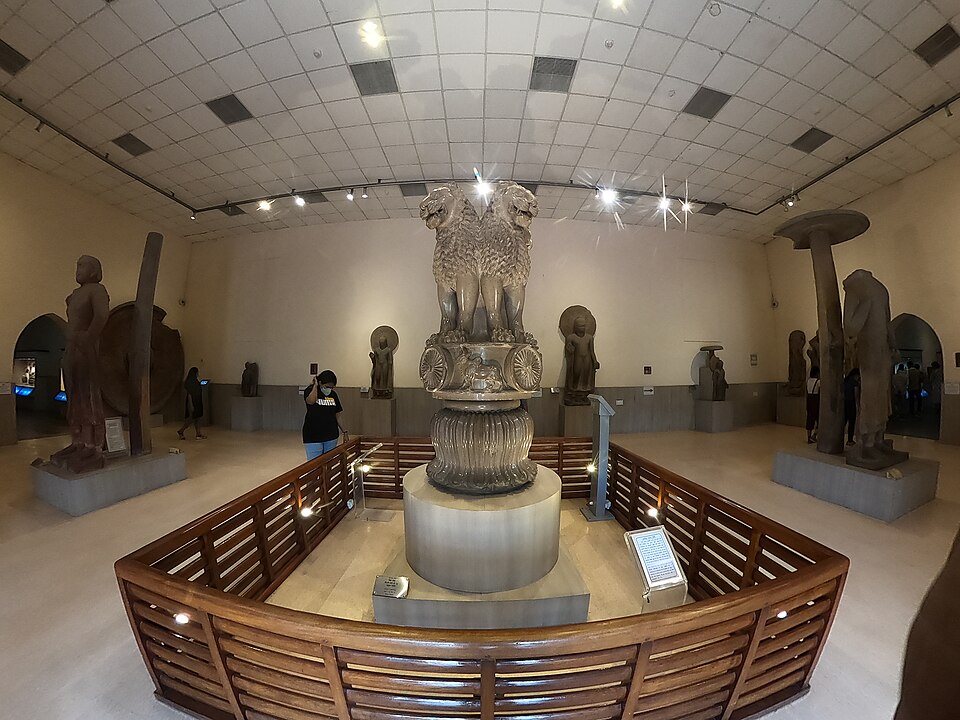
An ethic of dhamma inscribed across the subcontinent — and the capital that became the emblem of the Republic.
Freedom · 1932
The Communal Award
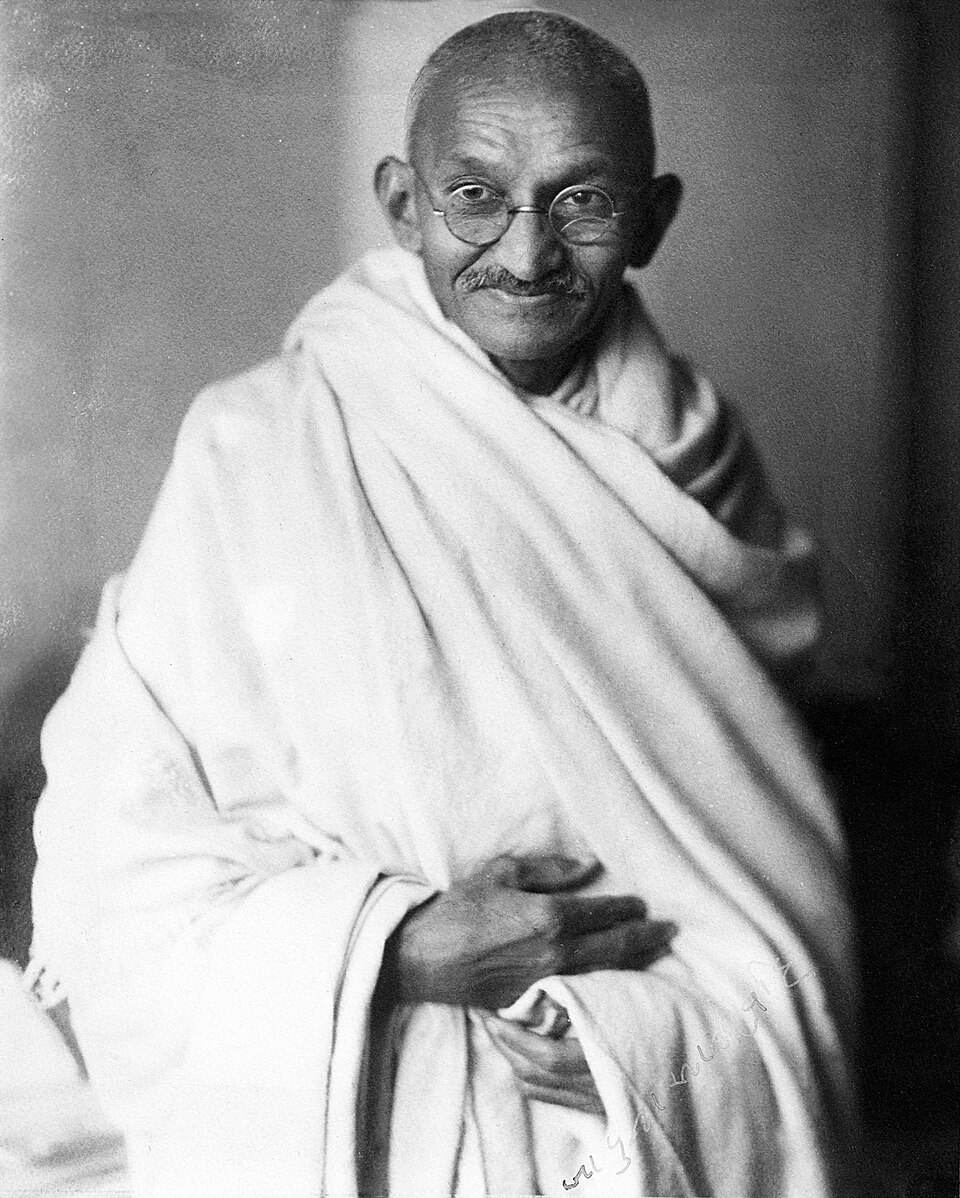
Gandhi fasted against separate electorates; under pressure Ambedkar signed for reserved seats instead — allies clashing over means.
Freedom · 1947
Constituent Assembly
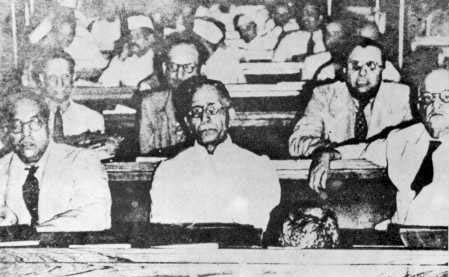
He chairs the Drafting Committee — the labour that would invert the old order, clause by clause.
Founding · 25 Nov 1949
Constituent Assembly
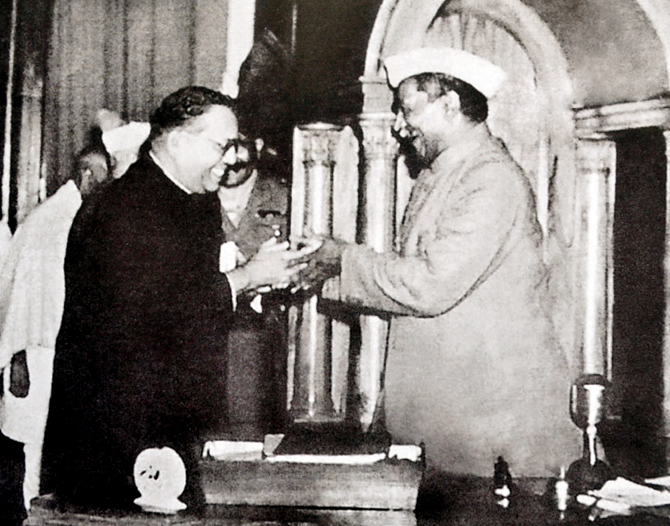
Three years' work, handed over and adopted by the Assembly.
The Republic · 26 Jan 1950
1950
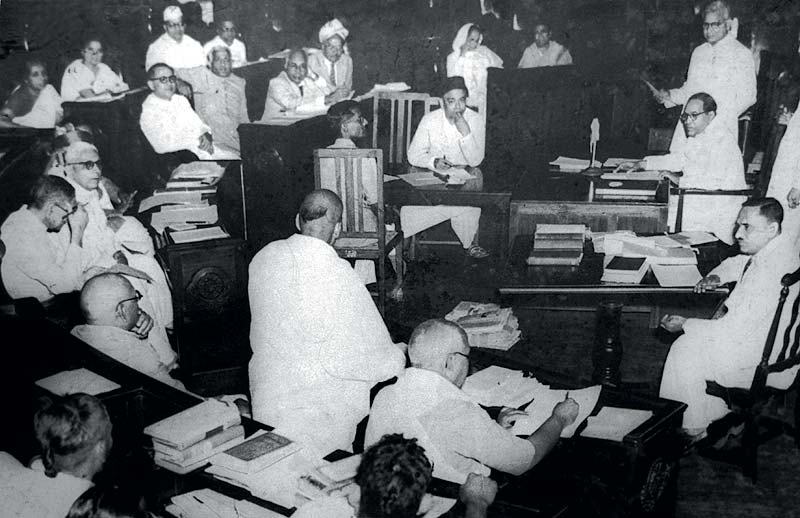
The new code comes into force — equality before the law, in force to this day.
The full length
One society, read along its length — from a Bronze Age treaty that first pins Indo-Aryan speech, through the classical law of the Dharmaśāstra, the colonial reforms, and the founding of the Republic, to the arguments running on your feed today. Every entry is tagged and dated. Where a traditional date and the evidence-based date differ, we say so — that gap is itself part of the lesson.
Harappa, Mohenjo-daro and Rakhigarhi flourish — planned drainage, standardised weights, long-distance trade. Its script is undeciphered, so its social order is genuinely unknown; claims that it was 'Vedic' or that it was casteless are both unproven. Ancient DNA from a Rakhigarhi individual (~2500 BCE), sequenced by Indian institutions, shows zero steppe ancestry.
Ancestry from Central Asian steppe pastoralists enters South Asia, correlating with the spread of Indo-Aryan languages and carrying the Y-lineage R1a-Z93. Migration and admixture over centuries — not an invasion, and not a caste. Kept on three separate tracks: genes, language, and caste.
A treaty between the Mitanni and Hatti (found at Boghazköy) invokes Indo-Aryan gods in Rigvedic order — Mitra, Varuṇa, Indra, Nāsatya. An external, dated fixed point for the spread of Indo-Aryan speech.
The Buddha's teaching rejects Vedic sacrifice and birth-based hierarchy. Centuries later, Ambedkar would read the origin of untouchability through the 'Broken Men' who stayed Buddhist — and would himself convert in 1956.
The Mauryan emperor Ashoka inscribes an ethic of dhamma — restraint, tolerance, welfare — on rock and pillar across the subcontinent. The lion capital of Sarnath later becomes the emblem of the Republic.
The Mānava-Dharmaśāstra reaches its form over several centuries — a legal-religious code fixing varna duties, graded punishment, and the disabilities of Shudras and those outside varna. Its traditional ascription to a primeval 'Manu' is a claim of authority, not a date.
Often called a classical 'golden age' of art, science and Sanskrit letters — and also the period in which the Dharmaśāstra and Puranic varna order was consolidated and elaborated. Splendour and caste hardening are the same era, not opposites.
The Alvars and Nayanars launch a devotional movement in the Tamil country that reaches across caste to God directly — an early current of anti-hierarchical religion from inside the tradition, not outside it.
The scholar Al-Biruni, travelling with Mahmud of Ghazni, devotes a chapter to 'the castes, called colours (varṇa), and the classes below them.' He records the four varnas, the Antyaja service groups beneath the Shudra, and the Chaṇḍāla and Ḍoma 'not reckoned amongst any caste' — untouchability, described by an outside witness some 800 years before British rule.
In Karnataka, Basava and the Vīraśaiva (Lingayat) sharanas reject caste, priestly monopoly and temple ritual, composing vachanas in the people's language. A frontal anti-caste challenge mounted from within Hindu devotion.
Bakhtiyar Khalji's force storms a fortified Buddhist monastery-town in Bihar; the monks are killed and a great library lost. A real catastrophe — but the source records 'large numbers of books,' not the viral '9 million,' and describes the fort at Bihar (Odantapuri), often conflated with Nalanda.
Turko-Afghan rule is established across much of northern India. Caste society persists under new rulers — the chroniclers (Minhaj, later Barani) describe a social order that the sultanate governs over rather than dissolves.
Ziauddin Barani writes one of the great Indo-Persian histories — and argues for a rigid, birth-based social hierarchy of his own, evidence that graded-rank thinking was not unique to the Dharmaśāstra. A chronicle from the 14th century, read critically.
Ramananda's circle — above all Kabir (a weaver) and Ravidas (a leather-worker) — preach a devotion that dismisses caste and ritual outright. Ravidas is claimed to this day by Dalit communities as their own voice.
Guru Nanak rejects caste distinction and ritual hierarchy; the institution of the langar — the common kitchen where all eat together regardless of rank — is a direct answer to caste commensality rules.
Babur founds the Mughal state; under Akbar it reaches an accommodation with Hindu society. Caste continues as the substrate of social life beneath imperial administration.
Abul Fazl's great survey of Akbar's empire divides society into ordered classes and devotes a book to the learning and law of the Hindus 'who form the bulk of the population' — a Mughal administrator's record of the same graded social order.
Shivaji is crowned at Raigad — but only after a pandit is brought from Varanasi and a Kshatriya genealogy supplied, because ritual kingship was barred to those of lower varna. The same caste gatekeeping he had to overcome is rarely mentioned by those who claim him today.
The East India Company's victory begins the transition from trading power to territorial ruler in Bengal — the hinge from Mughal India to the colonial state whose reforms and codifications fill the next era.
Under Warren Hastings, the Company decides Hindus will be judged in personal matters by their own śāstric law — and commissions translations of the Dharmaśāstra (Halhed, then Jones and Colebrooke) to run its courts. This is how Manu and its kin acquired real legal force in the modern era — the very code the Constitution and the Hindu Code Bill would later displace.
The 'pious clause' finally lets Christian missionaries into Company India — and the same Act makes the first state commitment to education (one lakh of rupees a year). Mission schools (Madras 1805, Vizag 1806) expand until they number ~3,778 in the Madras Presidency by 1901, reaching castes and girls the old order barred from learning.
The Bengal Sati Regulation makes the burning of widows a criminal offence, following the campaign associated with Raja Ram Mohan Roy and Governor-General Bentinck.
The Indian Slavery Act, 1843 ends the legal status of slavery in British India. Note the common mix-up: the 1807 Act abolished the British slave TRADE, not slavery in India — a wrong-date myth worth catching.
The Hindu Widows' Remarriage Act legalises the remarriage of widows, associated with the campaign of Ishwar Chandra Vidyasagar.
In Travancore, lower-caste Nadar women were forbidden to cover their breasts. After decades of struggle and violent backlash, a royal proclamation of 26 July 1859 grants them the right to an upper cloth — caste enforced on the body, and fought off it.
The Age of Consent Act raises the age of consent to 12. It is often mislabelled a 'child-marriage ban' — that restraint came later, with the Sarda Act of 1929.
The Morley–Minto reforms introduce separate electorates for Muslims — a mechanism later extended and central to debates over 'divide and rule' and to the 1932 dispute over the Depressed Classes.
At Mahad, after asserting the right of untouchables to draw water from the Chavdar tank, Ambedkar and his co-workers publicly burn a copy of the Manusmṛti — a deliberate rejection of the old code. One end of this site's thesis.
The Sarda Act sets minimum marriage ages — the actual restraint on child marriage, distinct from the 1891 consent law.
The Communal Award grants separate electorates to the Depressed Classes; Gandhi fasts against it; the Poona Pact replaces them with reserved seats inside the general electorate. A clash between allies over means, both claiming the same end.
The last major colonial constitution and, in structure, a direct ancestor of the 1950 document — much of its administrative machinery carried over.
Weeks after independence, the Constituent Assembly elects B. R. Ambedkar Chairman of the Drafting Committee. The burden of drafting will fall largely on him.
After 2 years, 11 months and 18 days of work, the Assembly adopts the Constitution. The day before, Ambedkar delivers his warning against the 'grammar of anarchy' and hero-worship.
India becomes a republic. Untouchability is abolished (Art. 17); equality before law (Art. 14) and non-discrimination (Art. 15) replace graded rank. The new code is in force.
The Untouchability (Offences) Act — later the Protection of Civil Rights Act — puts criminal teeth on Article 17.
After Ambedkar resigned in 1951 over the stalled original bill, Parliament passes it in stages — the Hindu Marriage Act, Hindu Succession Act and related laws — reforming marriage, divorce and women's inheritance.
At Nagpur, Ambedkar and hundreds of thousands of followers convert to Buddhism — his chosen exit from caste, and pointedly into an Indian-origin tradition. He dies weeks later, on 6 December 1956.
The Supreme Court holds that Parliament's power to amend the Constitution (Art. 368) is real but not unlimited — it cannot alter the document's 'basic structure'. Lawful amendment has a boundary, drawn by the courts.
A dedicated law criminalising atrocities against Scheduled Castes and Scheduled Tribes — protection that does not extend to OBCs, a distinction often blurred.
The Supreme Court upholds 27% OBC reservation while capping total reservation at 50% and excluding the 'creamy layer'. The same year, the Babri Masjid is demolished on 6 December.
The Hindu Succession (Amendment) Act gives daughters the same rights as sons in ancestral property — closing the largest gap the 1956 Act had left, half a century on.
The Prohibition of Employment as Manual Scavengers Act criminalises the hereditary bondage of specific castes to handling human waste and animal carcasses — the 'polluting' labour the old code fixed on those outside varna. That the law was needed in 2013, and that the work persists, measures how much of the old code still survives the new one.
A 10% reservation for the economically weaker sections is added by constitutional amendment — lawful under Article 368, and itself genuinely contested. Upheld 3:2 by the Supreme Court in 2022.
The Supreme Court awards the disputed Ayodhya site to the deity Ram Lalla on the balance of possessory evidence — while recording that the 1949 idol placement and 1992 demolition were unlawful. It did not hold that a temple was proven demolished for the mosque.
A seven-judge bench permits states to sub-classify Scheduled Castes so benefits reach the most disadvantaged within the category — the Madiga-vs-Mala question, now settled constitutionally.
The two-codes framing enters mainstream politics: the contrast between Ambedkar's Constitution and the Manusmṛti is invoked publicly at the level of national commemoration. The argument this site maps is a live one.
Entries are data — add or edit them in src/data/timeline.json. Where a traditional date differs
from the evidence-based one, the entry is tagged [Debated] and says so.
More entries (including verified colonial-reform dates and contemporary court citations) are being added as
sourcing is confirmed; see Method.