The two codes this whole site is about did not only meet on the floor of the Constituent Assembly. They met, more intimately, in the law of the family — and that is where the fight was bloodiest, because family law was the Dharmaśāstra’s home ground.
Why personal law was the real battleground
The Constitution abolished untouchability and guaranteed equality in a single stroke. But marriage, divorce, inheritance and adoption were governed by personal law — and for Hindus that meant the Dharmaśāstra, carried into the modern era as the “Hindu law” the British had operationalised in their courts. A woman’s inability to inherit, the permissibility of polygamy, the bar on marrying across caste: these lived in personal law, untouched by the Constitution’s general articles. To reach them, you had to rewrite the family code itself.
What the Hindu Code Bill actually proposed
Ambedkar, as independent India’s first Law Minister, drafted a comprehensive Hindu Code Bill to do exactly that. Its core changes were, for their time, radical:
[Documented]
- Monogamy made mandatory — ending sanctioned polygamy.
- Divorce permitted, and available to either spouse, on stated grounds (cruelty, desertion, incurable disease, and others).
- Inheritance rights for daughters — women given a real share in family property.
- Adoption across caste permitted.
Historians of the period describe these as going “very far in the direction of gender equity.” This was not a tidying of the old code. It was its replacement on the ground it cared about most. It also fit a larger design: the standard history of the Constitution’s framing reads the whole document as an instrument of social revolution — and the Hindu Code was that revolution reaching into the household, where the Constitution’s general articles could not.
The opposition — from inside Hindu society
The bill was fought ferociously, and the fight is instructive for a site that keeps insisting the target is a code, not a faith: the fiercest resistance came from within Hindu society — orthodox members, traditionalist organisations, and much of the conservative wing of the Congress itself, who saw the bill as an assault on sanatana dharma. The President, Rajendra Prasad, raised constitutional objections to it.
[Documented] Under that pressure, the comprehensive bill was stalled and broken up. Ambedkar resigned as Law Minister in September 1951, the collapse of the Hindu Code Bill among his stated reasons. The man who had drafted both the Constitution and the code to complete it walked out over the failure to pass the second.
How it finally passed
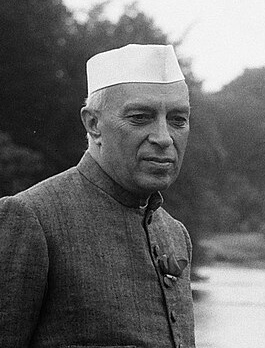
Nehru’s government, returned with a majority, enacted the reform in stages across 1955–56:
[Documented] the Hindu Marriage Act (1955), the Hindu Succession Act (1956), the Hindu Minority and Guardianship Act (1956) and the Hindu Adoptions and Maintenance Act (1956). Between them they carried most of what Ambedkar had drafted — monogamy, divorce, daughters’ inheritance — into enforceable statute. On the terrain of the family, the new code had displaced the old.
Why it is still unfinished — the evenhanded coda
Two honest qualifications keep this from becoming a victory lap.
[Debated] First, the reform applied only to Hindus (and Sikhs, Jains and Buddhists), not to all Indians — the Constitution’s own Article 44, directing the State toward a Uniform Civil Code, remains unfulfilled and politically fraught to this day. Second, the 1956 Succession Act was itself incomplete: daughters were still shut out of ancestral “coparcenary” property and of agricultural land in many states — gaps closed only by the 2005 amendment to the Hindu Succession Act, half a century later.
So the Hindu Code Bill is the clearest case of the thesis and its limits at once: the new code did replace the old on its most guarded ground — but it did so unevenly, for one community, over decades, and against resistance from within. The old order did not fall in 1950. It fell, in the family, in instalments — and the last instalment came in 2005.